/TLDR summary
Customers are different by more than just size, sector or spend. They are different by motivation.
Some want relief. Some want control. Some want growth. Some want less risk. Some need internal permission before they can move. Some just want the thing to be simple and not create another bloody job.
Those motivations change everything: the message, the proof, the sales process, the onboarding path, the success metric and the handoff between teams.
Most businesses segment customers so they can label them. But better businesses understand how customers move, then build the system around that.
Different customers move differently.
Why customer motivation should shape the system, not just the message.
Most businesses say they understand their customers.
Then they make them all walk through the same system.
Same website path. Same lead form. Same sales process. Same demo. Same onboarding. Same success metrics. Same renewal conversation.
It looks efficient from the inside. Neat, even.
But customers are not moving through your business because your funnel says they should. They are moving through pressure, urgency, fear, ambition, politics, habit, confusion, budget cycles and limited attention.
Which is a less tidy diagram. But much closer to the truth.
The mistake is thinking customers are different only by size, sector, revenue or product fit. Those things matter, but they don’t explain enough.
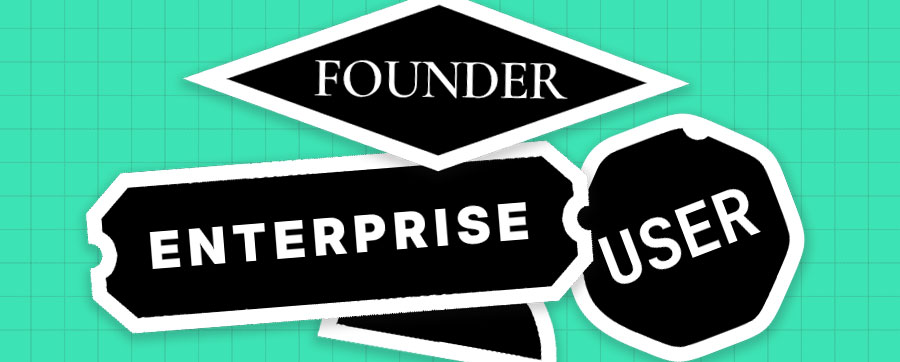
A small business owner trying to remove a painful admin problem does not move like an enterprise buyer trying to reduce risk across twelve teams.
A founder buying with their own money does not move like a procurement group protecting the business from a bad decision.
A daily user trying to make their job easier does not care about the same things as an executive sponsor trying to create visibility, control and confidence.
Same product but different jobs.
That’s the bit a lot of commercial systems miss.
Labels are not understanding.
Most segmentation is useful, but fairly thin.
Enterprise. Mid-market. Small business. High value. Low value. Strategic account. Warm lead. Existing customer. At risk.
These labels help a business organise its database. They do not necessarily help the business understand behaviour.
A label tells you what someone is. But it does not tell you why they are moving, what they are afraid of, who they need to convince, how quickly they can act, what proof they need, or what success looks like once they have bought.
That’s where the useful work starts.
You do not segment customers so you can label them. You segment customers so you can understand how they move. And once you understand how they move, the system has to change around them.
Not just the message, but the whole system.
Motivation shapes movement.
Different customers move differently because they are motivated by different things.
Some are looking for relief. They have a painful problem and they want it gone. These customers usually want speed, clarity and the shortest possible path to value.
Some want control. They are managing complexity and need visibility. They want to know who owns what, what is happening, where the risks are and whether the system will make the business easier to run.
Some want growth. They are looking for scale, opportunity, performance or momentum. They need to see upside.
Some want risk reduction. They are worried about mistakes, failure, compliance, reputation or internal fallout. They need proof, reassurance and a safe path forward.
Some want simplicity. They are already busy. They do not want another system that creates more work in the name of making work easier. We have all met that product.
Some want internal permission. They may already believe, but they cannot move alone. They need to bring a boss, board, team, finance person, operations lead or procurement process with them.
Some want confidence. They need to feel that the decision is sound, defensible and not likely to come back and bite them.
Some want consistency. They are trying to make a messy operation behave in a more repeatable way.
Some want personal credibility. They want to be seen as the person who fixed the problem.
Some just want to avoid blame (this last one is more common than most companies admit).
None of these motivations are soft. They change the commercial path.
A relief-driven customer does not want a forty-minute strategic overview.
A risk-driven customer does not want breezy confidence and a few nice screenshots.
A permission-driven customer does not just need a sales call. They need language, proof and artefacts they can take back into the business.
A control-driven customer does not only care about features. They care about visibility, reporting, ownership and confidence.
The motivation changes the movement. And the movement should change the system.
The operating model.
The simple model is this:
Motivation shapes movement.
And movement shapes system design.
That means a business needs to understand three things.
First, what is driving the customer?
Are they trying to remove pain, reduce risk, create control, grow faster, simplify work, win approval, protect reputation or prove something internally?
Second, how does that motivation change their behaviour?
Do they move quickly or slowly? Do they need one conversation or seven? Are they buying alone or inside a committee? Are they driven by urgency or caution? Do they need emotional reassurance, commercial proof, technical detail or peer validation?
Third, how should the business respond?
What message do they need? What proof do they need? What sales path makes sense? What onboarding experience will help them adopt? What success metric will actually matter? What handoff needs to happen internally so the customer does not feel the seams?
This is where customer understanding becomes operational. It stops being a persona deck and it starts becoming system design.
The old ‘one customer journey’ is usually an illusion.
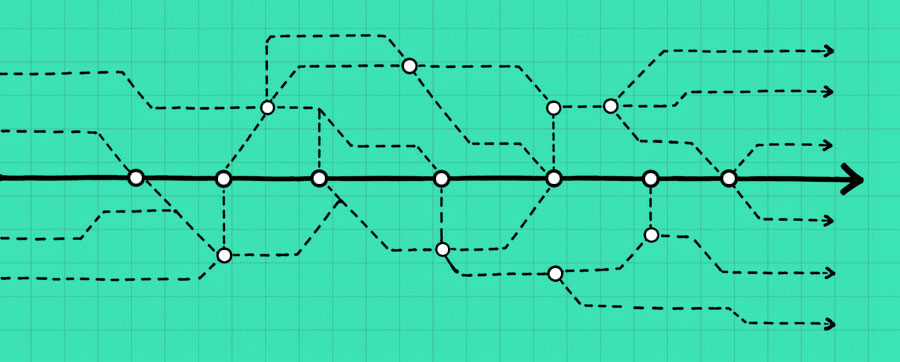
A customer journey can be useful. It gives the business a shared map. But most customer journeys are too neat.
They assume customers move through a clean sequence: awareness, interest, consideration, purchase, onboarding, success, renewal, expansion.
Sometimes they do, buuuuuut often they don’t.
A founder might jump from awareness to purchase because the pain is immediate and the decision is theirs.
A department head might spend months building internal support before anything looks like a real opportunity.
An enterprise customer might appear engaged, then disappear into procurement, risk review, budget timing and internal politics.
A user might love the product while the economic buyer still sees it as a cost.
A CFO might approve the spend while the team quietly resists the change.
A business has one commercial system, but customers need different paths through it. That's the design challenge.
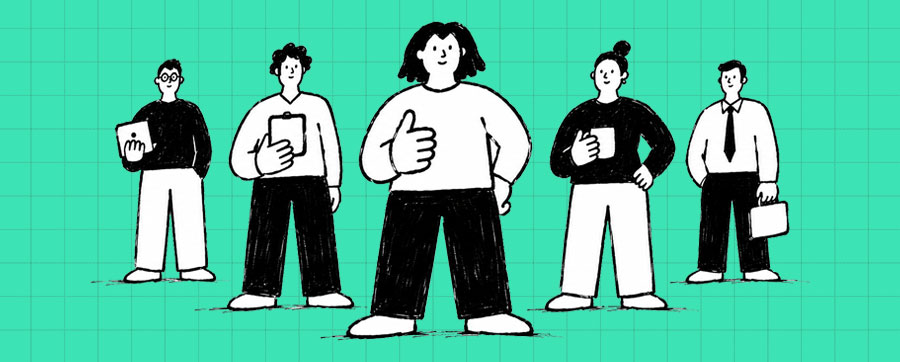
The customer is rarely one person.
One of the easiest mistakes in commercial design is confusing the buyer with the customer.
The person who signs is not always the person who suffers.
The person who suffers is not always the person who approves.
The person who approves is not always the person who makes adoption work.
The person who makes adoption work is not always the person who gets measured on the outcome.
That is why “customer” is often a lazy word.
In many businesses, the customer is a small political system pretending to be a contact record.
There may be an economic buyer, a daily user, a technical reviewer, an operational champion, a finance approver, a senior sponsor and a quiet internal blocker who has seen three systems fail before and has no interest in helping a fourth one make everyone’s life worse.
If your system treats all of those people as one person, it will miss things.
Marketing will speak to the wrong pain.
Sales will win the wrong agreement.
Onboarding will train the wrong users.
Customer success will measure the wrong signals.
Product will hear the loudest feedback, not necessarily the most important feedback.
Then the business will call it a customer problem. But it's usually a system problem.
What changes when you understand movement.
When you understand how different customers move, the whole commercial system gets sharper.
Marketing stops trying to make one message do every job. It can speak to different motivations without becoming fragmented or incoherent.
Sales stops running the same conversation with every customer. It can diagnose motivation, map influence, understand risk and match proof to the decision.
Onboarding stops being a generic product tour. It becomes a path to the specific outcome that customer actually cares about.
Customer success stops treating success as usage alone. Usage matters, but it is not the whole story. A customer may use the product and still not feel the business outcome. Another may use it lightly but get exactly the visibility, confidence or relief they needed.
Product gets better signal. Not every feature request is equal. Some customers are asking for control. Some are asking for simplicity. Some are asking for proof. Some are asking because their internal process is broken and your product has become the place where that pain shows up.
Operations gets more realistic. Different paths create different support needs, handoffs and service expectations. Pretending everything is standard does not make the complexity disappear. It just pushes it downstream.
This is why customer movement is not just a marketing idea. It is a commercial operating idea.
A real example.
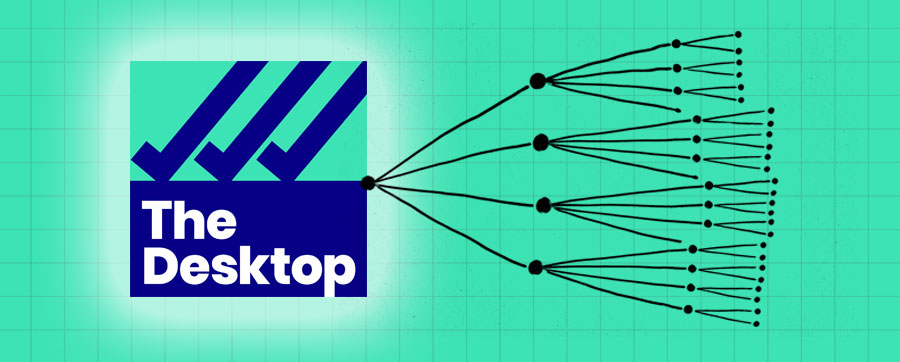
In my work with The Desktop, I had to map a customer base that looked like one market with a single shared journey from the outside but behaved like several different markets once you looked at how people actually bought, adopted and succeeded.
Some customers were motivated by immediate operational relief. They wanted to reduce admin, save time and feel more confident quickly.
Some were motivated by consistency. They needed a better way to create shared standards across multiple locations.
Some were motivated by governance and visibility. They wanted to know what was happening across the business without relying on scattered documents, manual updates and heroic individuals.
Some were motivated by risk reduction. They needed confidence that important work was current, controlled and defensible.
Some were motivated by rollout control. They needed to know how change would land across teams, roles and locations.
Same broad product category, with very different movement patterns.
That knowledge changed the commercial system.
It changed the messaging. It changed the sales questions. It changed the proof required. It changed the onboarding path. It changed the definition of success. It also changed who mattered in the decision.
A smaller operator could move quickly if the value was clear and the path felt simple.
A larger organisation needed more confidence, more stakeholder alignment and a safer implementation story.
A daily user cared about whether the system made work easier.
An executive cared about whether it created visibility, control and fewer unpleasant surprises.
Again, same product. Different job.
Designing around movement.
The practical question is not, “Do we have different customer segments?”. Most businesses do. The better question is, “Have we designed around how those customers actually move?”
That means looking at each customer type and asking:
- What are they trying to achieve?
- What are they trying to avoid?
- What pressure are they under?
- What would make them act now?
- What would make them delay?
- Who feels the pain?
- Who controls the budget?
- Who influences the decision?
- Who has to use the product or service?
- Who could block adoption?
- What proof do they need?
- What language do they use?
- What does success mean to them?
- What would make the system easier for them to move through?
These questions are not just for research. They should shape the commercial architecture.
The website path. The content strategy. The CRM structure. The lead scoring. The sales process. The demo. The proposal. The onboarding. The health score. The renewal conversation. The expansion motion.
All of it.
Because if the customer moves differently, the system needs to know what to do.
The real point.
Different customers do not just need different messaging. They need different operating paths.
That does not mean every customer gets a custom business. That would be chaos, and nobody needs more chaos dressed up as customer-centricity.
It means the business understands the main movement patterns and designs for them deliberately.
- Fast paths for customers motivated by relief.
- Safer paths for customers motivated by risk.
- Clearer paths for customers motivated by control.
- Stronger proof for customers motivated by confidence.
- Better internal tools for customers motivated by permission.
- Simpler experiences for customers motivated by simplicity.
- More structured adoption for customers motivated by consistency.
The system does not need to become complicated. It needs to become more accurate. That’s the difference.
Final thought.
Most businesses know their customers are different. The better businesses understand why they move differently. And the best ones build the system around that.
Because a customer journey is not one journey. It is a set of possible paths through the same business.
The job is to know which path the customer is really on, what is driving them, what is slowing them down, and what the business needs to do next.
That is where growth becomes less random and where the system starts doing its job.